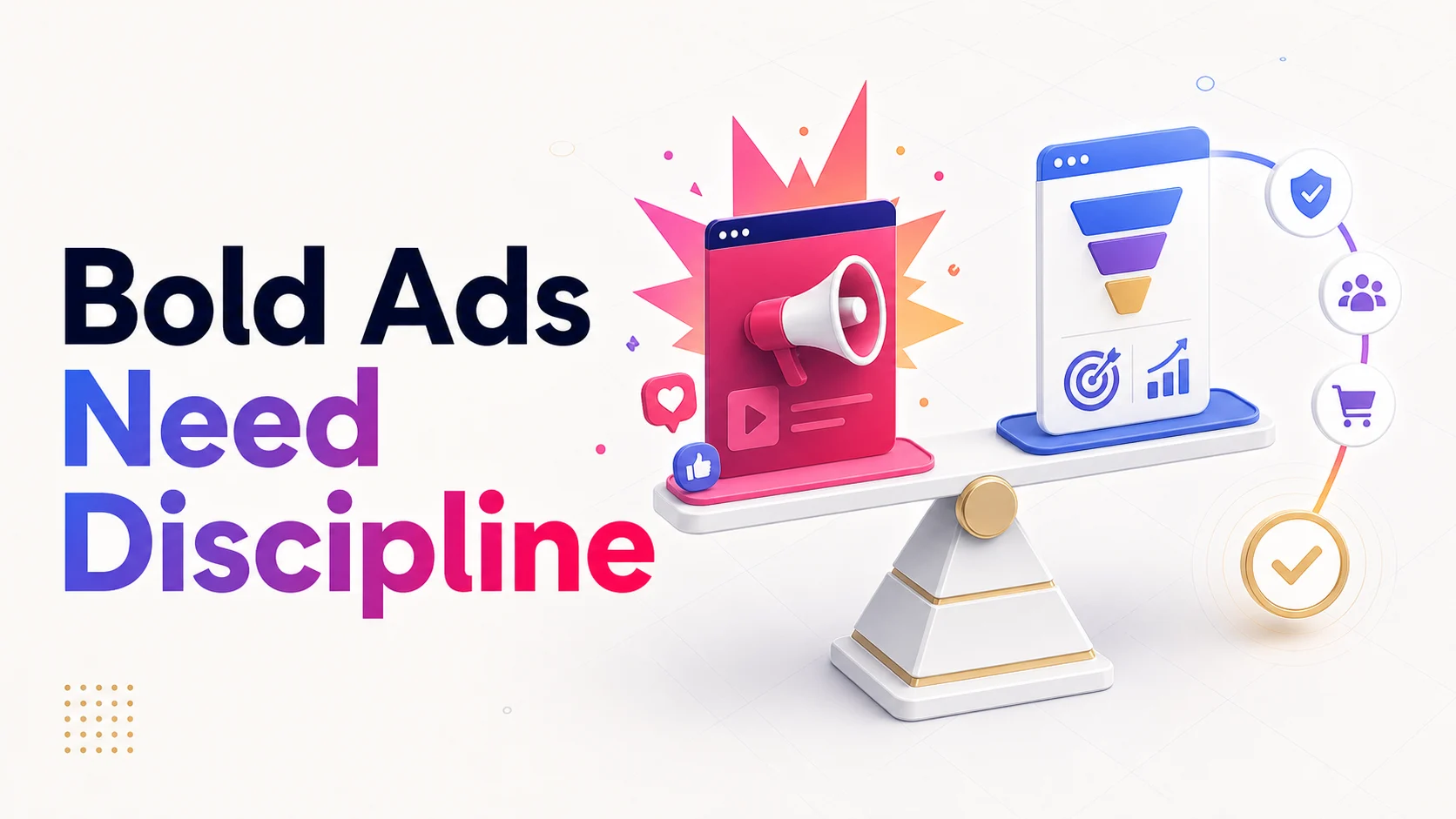
Bold advertising can get attention, but attention alone is not a business strategy. The real question is whether the message attracts the right audience and moves them closer to trust, leads, and sales.
Why this matters for business growth
Controversial campaigns often fail because the brand optimizes for reaction instead of relevance. People may talk about the ad, but the traffic can be low quality, the comments can damage trust, and the sales team may receive leads that are curious but not ready to buy.
What a stronger approach looks like
- Use bold positioning only when it connects to a real customer belief or problem.
- Know the difference between useful tension and empty provocation.
- Test the message with smaller audiences before scaling spend.
- Measure lead quality, conversion rate, and sales feedback instead of only clicks or comments.
Where this fits in the customer journey
This kind of improvement usually sits between awareness and decision. A visitor may discover your brand through search, social, ads, referrals, or email, but the business result depends on what happens next. The message has to feel relevant, the page has to build trust, and the follow-up path has to make action easy.
That is why Millionify does not look at content, design, traffic, CRM, automation, and reporting as separate pieces. Each one should support the next step in the buyer journey. When the system is connected, the same article, campaign, or page can support visibility, education, retargeting, sales conversations, and long-term brand trust.
Questions to ask before changing anything
- Who is this meant to help, and what business problem are they trying to solve?
- What should the reader believe or understand after engaging with it?
- What proof, examples, or process details would make the message easier to trust?
- What is the next useful action: read another guide, view a service page, request an audit, book a call, or speak with sales?
How Millionify thinks about it
Millionify builds paid campaigns around offer clarity, landing-page fit, tracking, and follow-up. If a bold angle is useful, it should still be supported by a clean path from ad to page to CRM. If the angle creates confusion, a calmer proof-led message usually wins.
Signals worth tracking
The right metrics depend on the channel, but most businesses should look beyond surface activity. Useful signals include engaged visits, scroll depth, CTA clicks, form starts, booked calls, assisted conversions, CRM stage movement, reply quality, and sales-team feedback. If a topic earns attention but never helps the buyer move forward, the strategy needs refinement.
It is also important to watch qualitative signals. Comments, questions, objections, repeated sales conversations, and customer language often reveal what your next page, campaign, or automation should explain more clearly.
What to do next
Before using a risky campaign angle, define what you want the audience to believe, what action they should take, and how your team will handle the response. Bold ideas work best when the backend is disciplined.
Want sharper ad strategy without wasting spend on noise? See our online paid ads service or book a strategy call.